Written by Sydney Stelmaszek
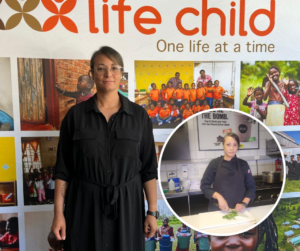
I’ve had the privilege of wearing many hats within Life Child over the last 13 years. From pastoring children and families in South Africa with Life Church to writing grants from a home office in Pennsylvania, USA, I’ve done a little of everything. In all seasons, it has been profoundly fulfilling to use the various skills and privileges that I have to serve others and to know my time and efforts make a tangible difference for orphaned and vulnerable children.
Having spent a considerable portion of my adult life living and working in southern Africa, I’ve grappled with the existential questions that inevitably come to face anyone navigating life as an expat. There’s no doubt- life is different in southern Africa than in my home country, the United States. And while I’ve faced my own challenges throughout life, they have been much less traumatic and pervasive than those that I have learned are common for friends, colleagues, and neighbors in Africa. As it came to pass, the birth of my third child while living abroad would spark a greater appreciation for the work we do within Life Child to strengthen families facing unrelenting obstacles.
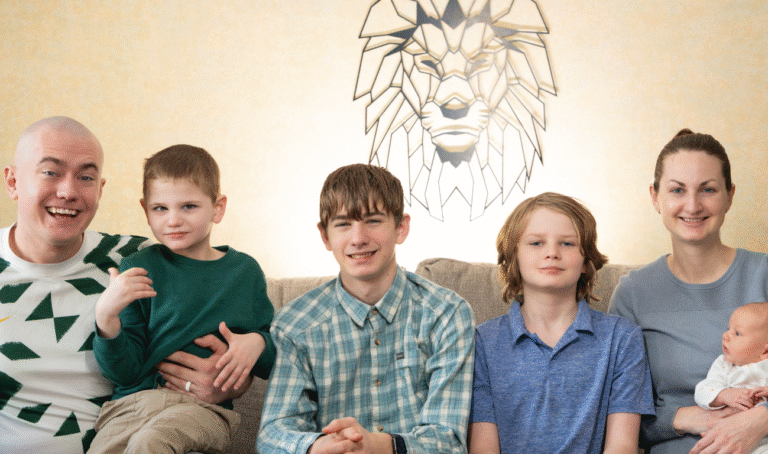
Our family’s third son, Emmitt, was born in November 2017 after a healthy and uneventful pregnancy. We took him home earlier than expected and thought that we had a good grasp on parenthood, as we had already had two lovely sons. Little did we know that our family had hopped on the traumatic rollercoaster that is life with a rare disease.
Nearly all of us will take for granted the intricate wiring of neurons in our brains, which makes everyday tasks possible. From talking to walking, from eating to regulating our emotions, a sophisticated stew of chemicals, receptors, and networks in our brains enables our minds and bodies to work. In Emmitt’s case, a single letter change in his DNA that simply occurred (it was not inherited) threw the stew recipe off and would cause devastating effects: no speech, severe seizures, autism, aggressive behaviors, emotional regulation challenges, sleep disturbances, chronic constipation, and severe intellectual and physical disability.
The journey to figuring all of that out was a long one. Little red flags over missed milestones became a five-alarm fire when Emmitt began having hundreds of seizures each day around one year old. We were privileged to receive genetic testing in a resource-scarce medical landscape almost immediately. This pinpointed the exact cause of Emmitt’s challenges, connected us with other families with the same disease, and gave us the knowledge to pursue the right treatments for his condition. We were no longer hoping for a child with developmental delays to eventually catch up with peers through extensive therapy routines or medications.
In the quiet of evenings when my children had gone to bed, I would wonder about this fate we had been given. Up until this point, I felt life had dealt kindly with me. I still feel that way. But I began to see stress fractures forming as the realities of Emmitt’s condition began to overwhelm our family. We had health care, but “healthy-people” health care. We had to sell items often to pay for tests and medications we didn’t even know existed. My mental health took a toll, and depression set in. I struggled to connect with my other children and always felt that I was failing everyone. Everyone lacked sleep, woken up each night to Emmitt screaming during nocturnal seizures. My husband and I had a constant barrage of new, stressful decisions to make, which strained our marriage and put us at odds. I felt that, at any second, all of life would fall apart and, in some ways, it did. After a ten-day stint in a Johannesburg hospital, we made the painful decision to return to our home in the USA. A year and a half later, we would move again, this time to a state with more robust support in place for children like Emmitt.
All of this opened my eyes in new ways to the challenges that our Life Child families face. While they may not be grappling with a rare disease, the effects of cyclical poverty, deprivation of necessities like food and education, and so many other variables are incredibly significant. The challenges that they face are multifaceted and affect every corner of life for every member of the family. Because of this, they also face stress fractures. These fractures sometimes give way to breaks in the family, which manifest as parents leaving, trafficking of children, or disease overwhelming the body.
I’m thankful to be part of an organization that delivers holistic support, aiming to strengthen families that experience such vulnerabilities. It is a true victory when families can remain together and forge a new path through strategic interventions. I’m even more thankful to be part of an organization that prioritizes the spiritual development of each person in addition to addressing tangible challenges. Indeed, my faith in Christ has played a central role in my own circumstances, and He has proven to be an ever-present help in times of trouble.
My family’s story is just one of many stories where an unexpected diagnosis can lead to vulnerability. To read about the challenges faced in rural Mozambique by one of our courageous Life Child moms, please take a moment to read Virginia’s story here. This holiday season, Life Child is raising funds to strengthen families like Virginia’s in southern Africa, and we invite you to visit our giving page to make a donation.